
 Across commercial, educational, and healthcare environments, Reverse Osmosis (RO) is becoming one of the most effective ways to control the water quality variables that lead to scale, corrosion, and premature equipment failure. Two areas where the value of RO is especially clear are humidifier makeup water and sterile processing systems operating under AAMI ST108 requirements.
Humidifiers Demand High-Quality Water
Humidifiers are among the most water-sensitive mechanical systems in a building. As water is introduced into the supply air, any dissolved minerals or contaminants present in the water can quickly become operational problems.
Traditional water softening alone does not address all of these issues. While softeners remove hardness, they leave behind total dissolved solids (TDS), silica, chlorides, and alkalinity. These remaining contaminants can still contribute to scaling, fouling, and inconsistent humidifier performance.
RO systems, by comparison, remove 95–99% of dissolved solids, dramatically reducing maintenance requirements, extending equipment life, and stabilizing humidifier output. In facilities with multiple humidifiers, a centralized RO system feeding a distribution loop can provide consistent water quality across all units, improving overall system reliability.
RO in Modern Building Infrastructure
As water quality challenges and regulatory expectations continue to evolve, RO has become a core component of modern building infrastructure. Facilities today face higher expectations for reliability, lower tolerance for equipment downtime, and increasingly strict water quality requirements—particularly in healthcare environments.
RO systems help meet these demands by producing water that is low in minerals, conductivity, and chlorides. This level of purification protects mechanical equipment, reduces scaling and corrosion, and helps stabilize long-term system performance.
 Meeting AAMI ST108 Requirements
RO is the only practical technology that consistently meets Critical Water expectations under AAMI ST108, the standard governing water quality for sterile processing systems.
The ST108 standard establishes strict water quality limits designed to protect washers, sterilizers, and surgical instruments from scale, corrosion, and residue. The same contaminants that create problems in humidifiers can also damage sterile processing equipment.
RO systems address these challenges by reliably reducing silica, controlling chlorides, lowering conductivity, and removing hardness. For healthcare facilities working to meet ST108 standards, RO often becomes a central component of the water treatment strategy.
Key Design Considerations for RO Systems
Properly designing an RO system requires evaluating the incoming water quality and the specific needs of the facility. In many cases, pretreatment may be required to protect the RO membranes and ensure consistent performance. Common pretreatment solutions include:
- Water softening
- Carbon filtration
- Sediment filtration
Some advanced systems, such as intelligent RO technologies like EasyWater’s SmartGuard RO, can minimize or eliminate the need for traditional pretreatment depending on water conditions.
Facilities must also consider storage and distribution strategies for RO water. These may include:
- Pressurized storage tanks
- Atmospheric storage tanks with recirculation
- UV disinfection for microbial control
Monitoring is another critical component. Tracking parameters such as conductivity, hardness, and microbial indicators helps ensure compliance with ST108 documentation requirements and confirms system performance over time.
Protecting Equipment and Ensuring Compliance
For sensitive mechanical assets, RO eliminates many of the chronic water quality problems that drive maintenance costs and equipment downtime. In healthcare environments, it also plays a critical role in meeting AAMI ST108 requirements and protecting patient safety.
Investing in an RO system is ultimately an investment in reliability, compliance, and long-term asset protection.
Partnering with Water Solutions Group
High-purity water starts with understanding the quality of your incoming water supply. Water Solutions Group provides water testing and system selection support to help facilities identify the right RO solution for their application.
Whether you are looking to protect humidifiers, improve building system performance, or prepare for AAMI ST108 compliance, our team can help evaluate your water quality and recommend the appropriate equipment.
Contact Water Solutions Group to review your water conditions and explore innovative RO solutions designed to protect your facility and its critical systems.
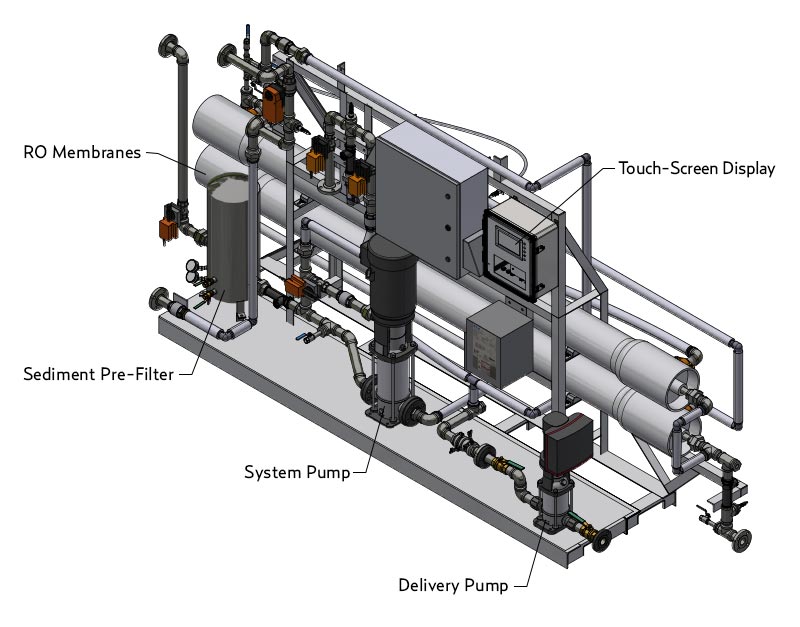 EasyWater SmartGuard Reverse Osmosis
The 4 Sustainability Challenges in Conventional RO Systems:
- Chemical and salt pretreatment requirements
- Excessive water waste from inconsistent recovery
- Membrane fouling from mineral and biological buildup
- Ongoing maintenance and operational inefficiencies
EasyWater’s SmartGuard Reverse Osmosis System is an intelligent, fully integrated RO platform designed to improve efficiency while reducing chemical dependency.
Water Solutions Group offers EasyWater SmartGuard RO and other innovative water quality solutions.
Water Solutions Group is a segment division of the R.L. Deppmann Company created to provide end users and engineers with a valuable resource in efforts to improve water quality. Proper water quality management protects the equipment, operations, occupants, and environment. Water quality should be considered at the time of design to ensure safe and efficient operating systems. Our intimate knowledge of water systems positions Water Solutions Group to be the ideal partner when evaluating operational issues that may arise because of poor water quality.