We conclude the expansion tank sizing series of the R. L. Deppmann Monday Morning Minutes with a double feature: a short video showing how to …


We conclude the expansion tank sizing series of the R. L. Deppmann Monday Morning Minutes with a double feature: a short video showing how to …
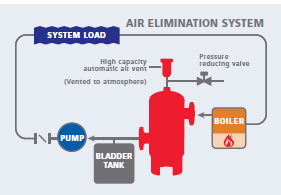
Choosing to use a Bell & Gossett ASME bladder style expansion tank, ASME diaphragm style tank, or ASME standard compression tank in your hydronic system …
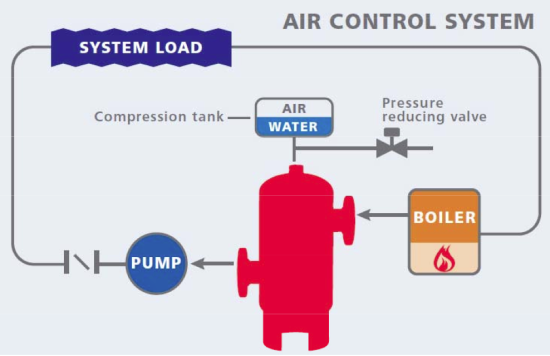
Choosing to use a Bell and Gossett ASME bladder style expansion tank, ASME diaphragm style tank, or ASME standard compression tank in your hydronic system will depend on several factors. Today we look at the standard compression tank used less often today and referred to as an “Air Control System”.
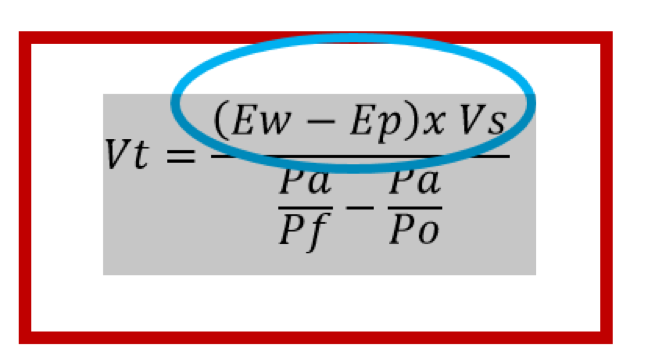
Acceptance Volume should be one of the values shown in the hydronic system tank schedule. In the last two R. L. Deppmann Monday Morning Minutes, we addressed the pressures required in the denominator of the tank formula. Today, we examine the temperatures and fluid type which are required inputs for selection programs to determine the acceptance volume of the tank.
In the last R. L. Deppmann Monday Morning Minutes, we presented the cold fill pressure calculation needed for the expansion tank fill pressure. Another piece …
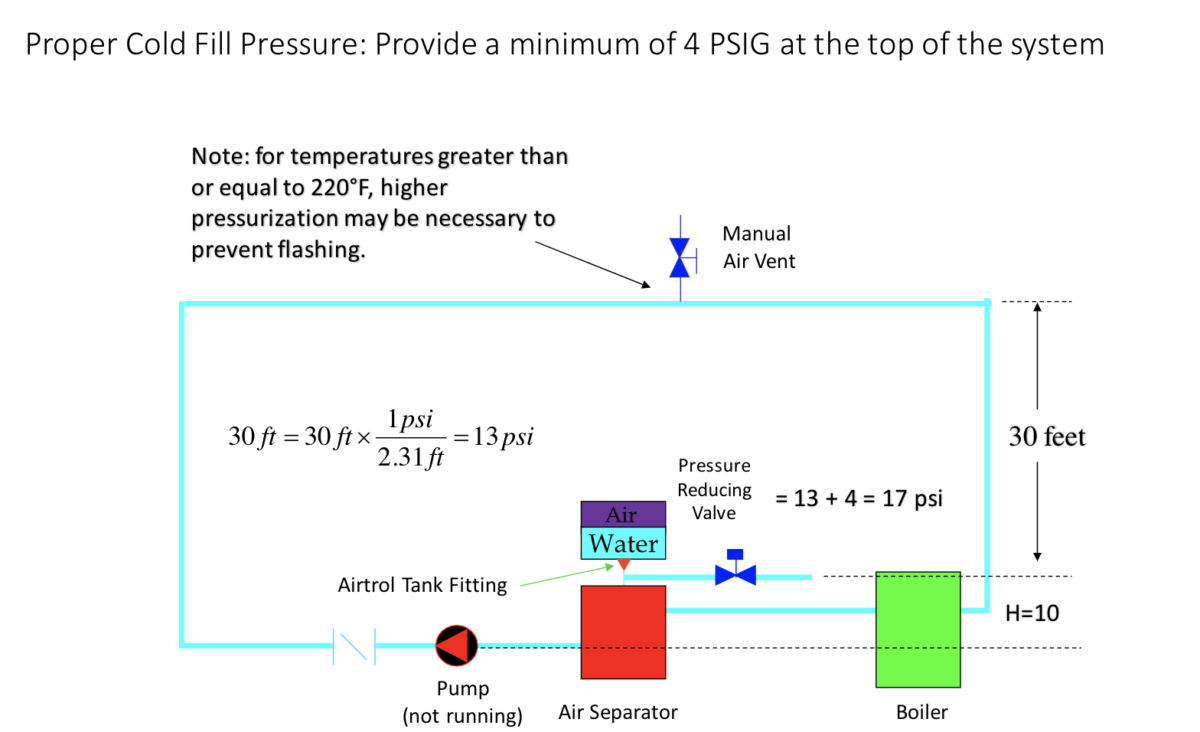
Cold fill pressure is defined as the initial pressure required to fill the hydronic system from the point of the gauge readout to the top …
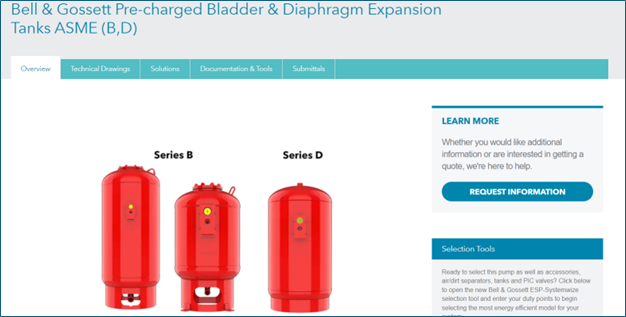
Bell & Gossett (B&G) provides a simple to use program for the sizing of expansion tanks. The engineer determines the input and enters the numbers. …
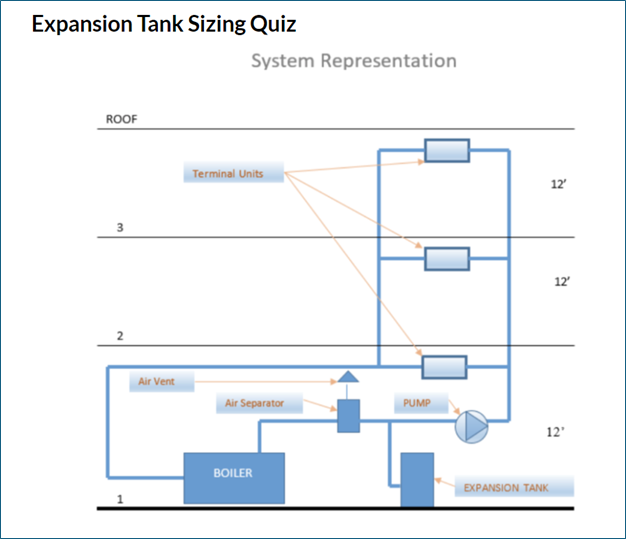
The sizing and selection of expansion and compression tanks is straightforward when the engineer has the proper information. Today, we list the seven things you …
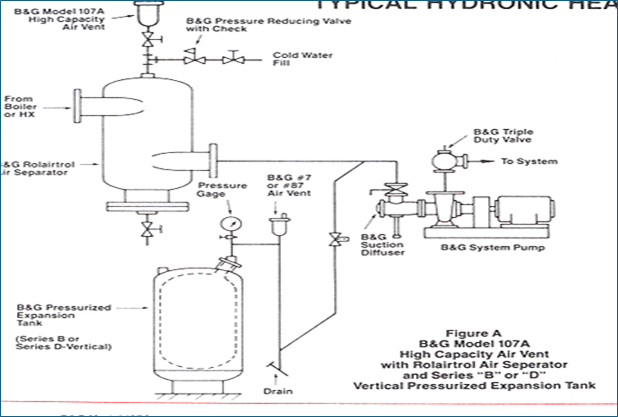
The expansion tank is a critical component in the closed system hydronic heating and cooling design. The sizing and location of the expansion tank is …

During a recent visit to a K-12 school hydronic system, I was asked if there was a way to determine the total system volume. My tongue …