In many ways, Psychrometrics is like a Rubik’s Cube. Change one thing, and you automatically change something else. But instead of shifting colored cubes around, …
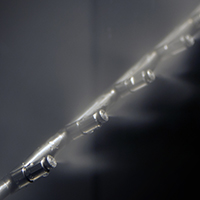

In many ways, Psychrometrics is like a Rubik’s Cube. Change one thing, and you automatically change something else. But instead of shifting colored cubes around, …
I have a 15 psig steam system which operates at about 7 PSIG most of the time. Is the Hoffman Main Steam Vent Model 75 appropriate for this application with its listed 15 psig maximum?
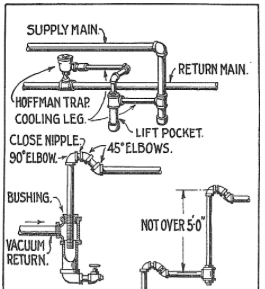
When you use the word vacuum with most people, they think of sucking something up like a vacuum cleaner does. There are times that vacuum condensate systems were used to lift or “suck up” the condensate from a lower level. Today, we will examine the use of vacuum condensate pumps to lift condensate from a low return.
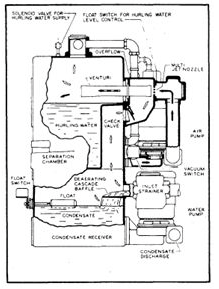
We began a series about vacuum condensate units and introduced one of their uses: the reduction of time to bring a building up to temperature …
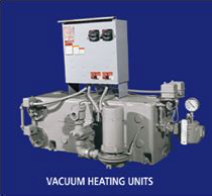
Every heating season we get, at least, a half dozen calls with the question above, which is the subject of today’s R. L. Deppmann Monday Morning Minute. Vacuum condensate transfer pumps exist in many older steam heating systems. There were many reasons contractors and engineers used these pumps but most of the systems fall into three categories: time control, temperature control, and condensate lift.
In the last couple Monday Morning Minutes, we showed how the type of humidifier dispersion method could affect the absorption distance. Let’s look at an example. Ex: 5000 CFM at 55OF Duct temperature to provide a room RH at 35% at 70OF with 50% outside air. [Read more…]
Last week, we described the criteria that may affect absorption distance. This week we look at how your choice of humidifier dispersion assembles may affect that absorption distance. Call your R.L. Deppmann sales representative to assist you in selection of the best dispersion method for your application.
Absorption or non-wetting distance is the dimension downstream from the leaving side of the steam dispersion assembly to the point where wetting will not occur, although wisps of steam may be present. Solid objects at duct air temperature, such as coils, dampers, fans, etc., downstream of this dimension will remain dry. Location A is the best choice. [Read more…]
Duct or AHU temperature. Cool air absorbs less than warm air and requires a longer absorption distance. When equal amounts of steam are introduced into equivalent ducts but with different air temperatures, the lower temperature systems of 50 °F to 55 °F are more difficult to ensure absorption than systems with higher temperatures.
Humidification of buildings helps provide a healthy and comfortable work environment. The next several R.L. Deppmann Monday Morning Minutes will examine steam absorption humidification and provide solutions to some of the common issues we see on a regular basis. Dri-Steem Corporation provides a variety of products to solve the many needs in this area of the HVAC